Chapter 5d — Touch
Touch is the most instinctive sense in architecture and design.
When people see something they like, the automatic reaction is often to reach out and touch it. The eyes discover the object, but the hand confirms it. Texture, temperature, weight, and surface reveal information that sight alone cannot provide.
Touch transforms admiration into connection.
A polished metal surface feels precise and cool.
Natural stone feels solid and timeless.
Wood feels warm and alive.
Fabric softens a space and invites comfort.

In sensory architecture, materials are not chosen only for how they look, but for how they respond to the human hand. Texture becomes a language between object and person.
A wall that invites the hand.
A handle that feels perfectly balanced.
A sculptural object that encourages exploration.
Science shows how powerful this sense is. The human fingertip is extremely sensitive: people can detect surface differences as small as 10–20 micrometers (about 0.01–0.02 mm). Even the smallest change in height or texture on a material can be perceived by touch.
This means that even a minimal change in the height of a surface can be felt.
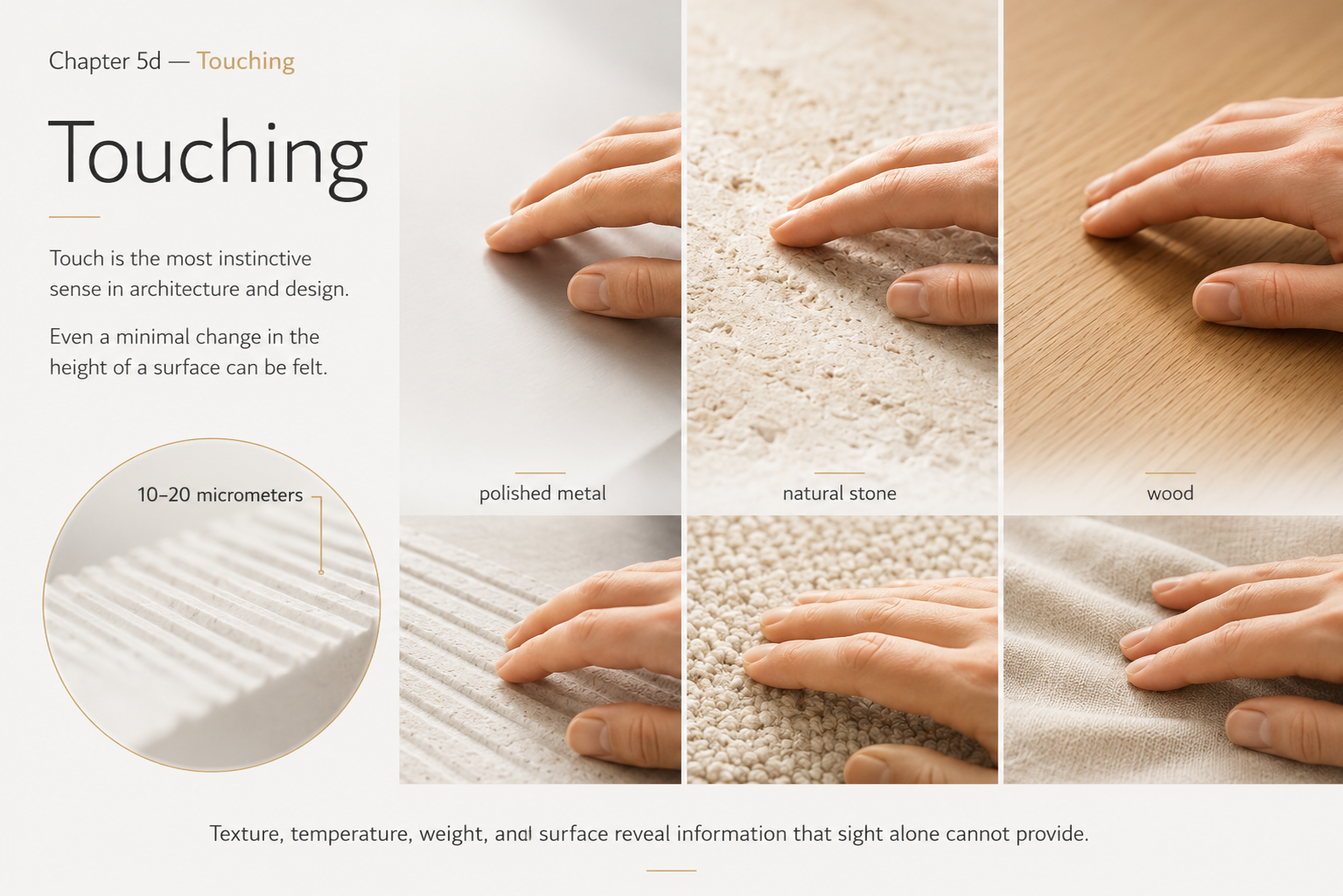
A subtle ridge in wood.
A fine texture in stone.
A slight embossing in metal.
A delicate pattern in fabric.
These microscopic differences create richness and authenticity in materials.
Within the SHOTT philosophy of YourSenses, touching is the moment when design becomes physical experience. It is where architecture leaves the visual world and enters the sensory world.
Because when people touch a space, they no longer simply observe it.
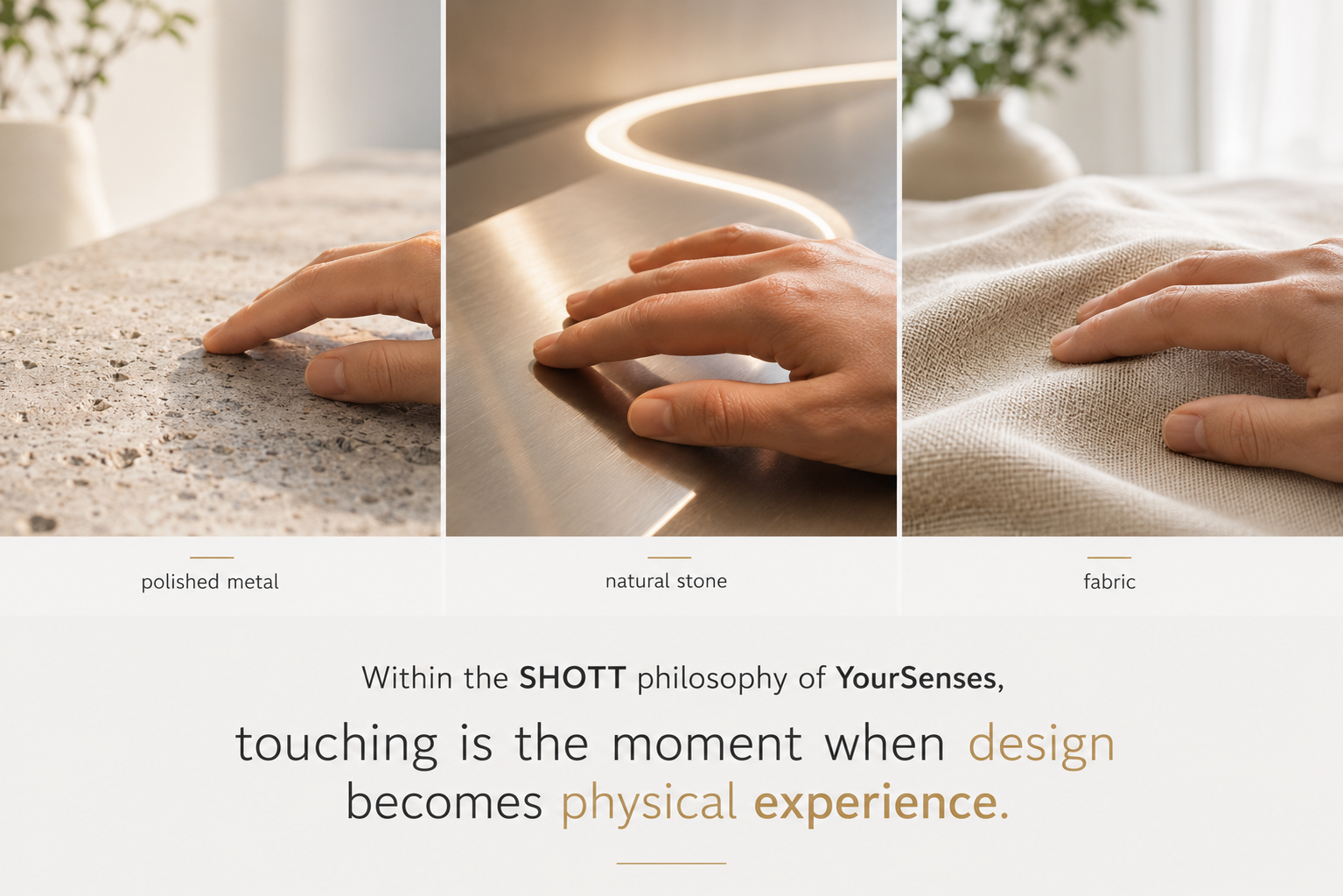
They connect with it.