Chapter 5a – Smell
The Invisible Layer of Experience
Before we consciously understand a space, we already feel it.
Scent is the most direct pathway to memory and emotion.
Unlike sight or sound, smell bypasses rational interpretation and connects immediately to the limbic system of the brain — the part responsible for emotion, memory and instinct.
This makes smell one of the most powerful yet often overlooked elements in spatial design.
Within the YourSenses philosophy, smell is not treated as decoration or perfume.
It is an invisible architectural layer that subtly completes the sensory environment.
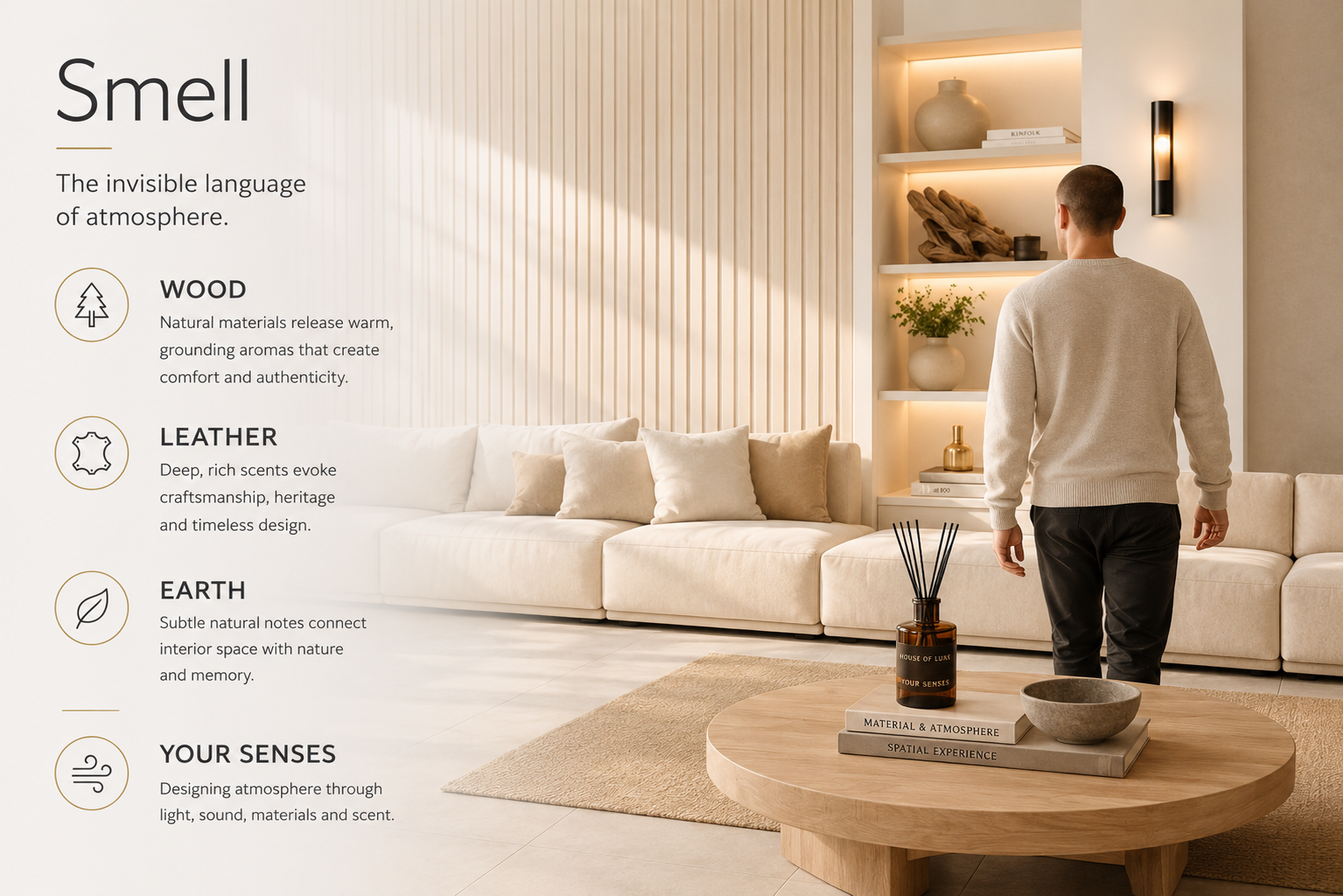
A carefully chosen scent can transform the perception of a space:
- warm scents create comfort and intimacy
- fresh notes increase clarity and focus
- natural aromas strengthen the connection with materials and nature
Because scent is intangible, it must be used with restraint.
The goal is not to dominate the space, but to support the emotional atmosphere created by light, sound and materials.

In hospitality, retail and cultural environments, scent becomes a powerful identity tool.
Just as light defines visual rhythm and sound defines spatial depth, scent anchors memory.
People may forget what they saw.
They may forget what they heard.
But a scent can bring an entire place back to life in a single moment.
Within the SHOTT philosophy, smell represents the instinctive layer of perception — the point where space moves from physical environment to emotional experience.
It is the quiet signal that tells the human mind:
You are here.
And this place is meant to be remembered.
