In General
Color temperature sounds technical. In reality, it is about perception.
The color temperature of white light is expressed in Kelvin (K). It is based on a physical principle: imagine a perfect black body being heated. As the temperature rises, the emitted light shifts in wavelength — from reddish tones to white and eventually bluish tones.
According to Wien’s law, higher temperatures produce shorter wavelengths (bluer light). Yet we perceive the opposite emotionally: light with a low Kelvin value feels “warm,” while light with a high Kelvin value feels “cool.”
Physics and perception are not always aligned.

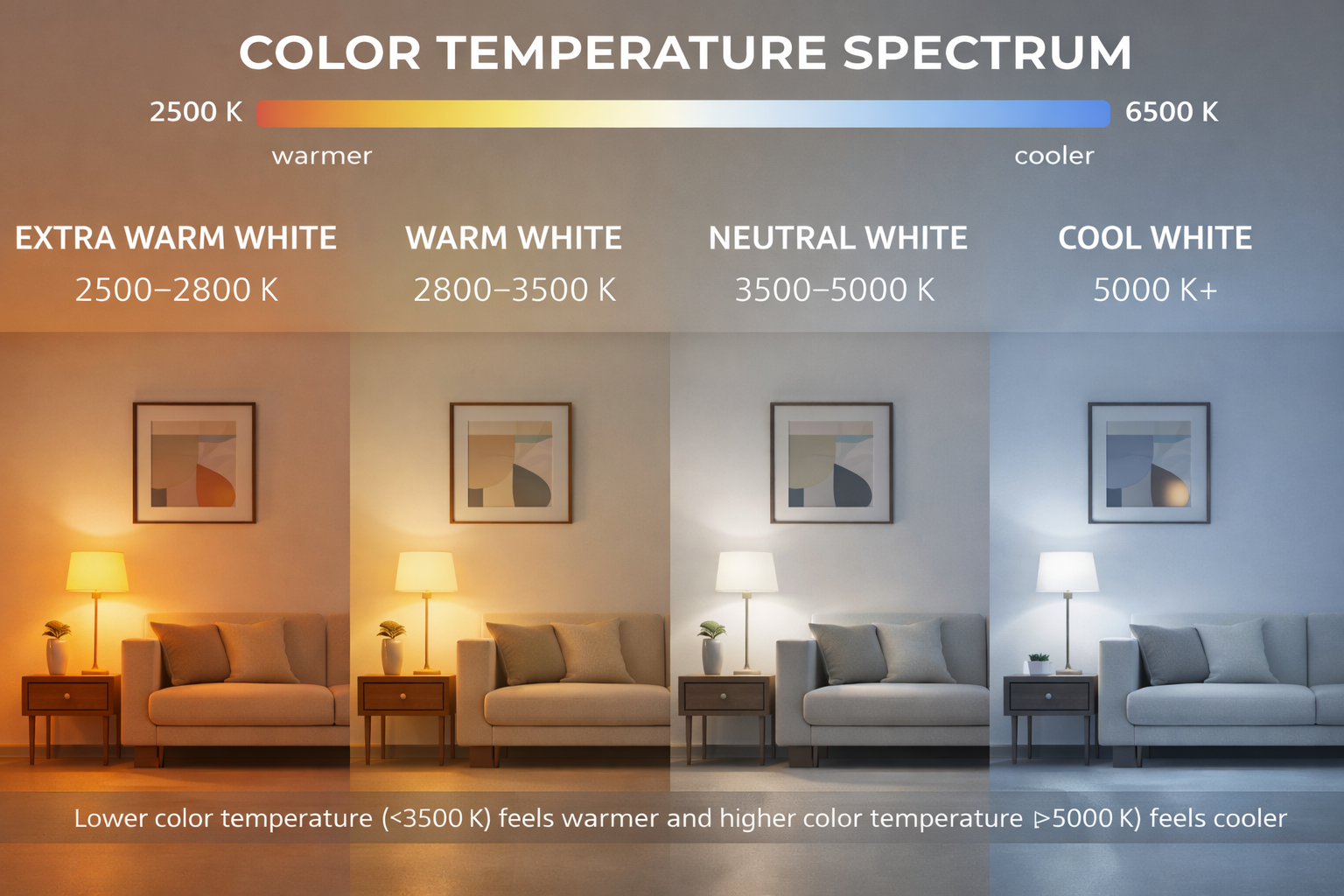
Practical Classification
2500–2800 K – Extra Warm White
Intimate and atmospheric. Comparable to candlelight or classic incandescent lamps.
2800–3500 K – Warm White
Comfortable residential lighting. Common in homes, hospitality and restaurants.
3500–5000 K – Neutral White
Brighter and more functional. Suitable for offices, retail and workspaces.
5000 K and above – Cool White
Crisp and technical. Often used in workshops, medical environments and task lighting.
Real-World References
1200 K – Candlelight
2000 K – Sunrise / Sunset
2800 K – Traditional incandescent lamp
3000 K – Studio lamp / standard warm white
3200 K – Halogen
4000 K – Neutral fluorescent lighting
5000 K – Daylight (D50)
5600 K – Standard daylight
6500 K – Television and monitor reference
7000–10000 K – Heavy overcast or north-facing shade
What Does This Mean for Design?
Color temperature is not merely a technical specification. It is an emotional decision.
Warm light (2700–3000K) reduces tension, enhances comfort and enriches materials. Wood appears deeper. Skin tones look softer. Spaces feel intimate.
Neutral light (3500–4000K) increases clarity and contrast. Details become sharper. Colors appear more objective.
Cool light (5000K+) supports focus and functional precision. Without careful balance, however, it can feel clinical or harsh.
The correct color temperature is always contextual. Architecture, materials, function and time of day all matter.
Light is not just illumination.
It is a psychological tool.
When you understand color temperature, you design not only with lumens — but with rhythm, atmosphere and human perception.

No responses yet